Over Two Decades of V-Twin Passion Built to Preserve Harley Culture Driven to Keep the Road Alive
Harley-Davidson Cultural Timeline
1903–2025
For more than two decades, OFFRAMP has lived and worked around Harley-Davidson motorcycles — from custom builds and replacement parts to the culture behind every ride. This timeline was created to help riders, builders, and Harley enthusiasts understand how the machines evolved, how the icons were born, and why this culture still carries so much weight on the open road.
Harley-Davidson Model History
A plain-language cultural timeline of gasoline, steel, V-Twin thunder and the machines that shaped Harley-Davidson history.
The Harley-Davidson Cultural Timeline
Most motorcycle timelines read like a dry parts database. This page takes a different road.
Here, Harley-Davidson history is told as a plain-spoken chronicle of gasoline, steel, V-Twin thunder and American culture. Instead of cold specs alone, the story focuses on the eras, the machines, the engine breakthroughs and the symbols that turned Harley-Davidson from a small Milwaukee workshop into one of the most recognizable names in motorcycle culture.
Volume I takes us back to the raw mechanical age of 1903–1959: from the wooden shed and early board-track racers to the first V-Twin legends, wartime workhorses, Panhead cruisers and the birth of the Sportster.
The Beginning — From Chaos to the V-Twin Soul
Era Overview
This was the wild age when the internal combustion engine was still fighting to replace the horse. In a 10-by-15-foot wooden shed in Milwaukee, William S. Harley and the Davidson brothers built the first pieces of what would become an American motorcycle legend. During these early years, Harley-Davidson’s mission was simple: survive, prove the machine, and earn trust. Racing, endurance runs and World War I military contracts helped the brand build a reputation for tough, dependable engineering.
Core Evolution
The earliest machines were little more than motorized bicycles, powered by single-cylinder engines and primitive carburetion. But the real soul of Harley-Davidson arrived with the 45-degree V-Twin engine layout — the mechanical heartbeat that would define the brand for generations. By 1915, Harley-Davidson had added what was then serious high-end equipment: a three-speed sliding-gear transmission and electric lighting.
Milestone Machines
1903 Single-Cylinder Prototype
A bare-bones belt-drive machine with no real suspension — pure mechanical beginnings.
1909 Model 5D V-Twin
Harley-Davidson’s early V-Twin breakthrough. It helped set the foundation for the brand’s long-running V-Twin identity.
1915 Model 11F
One of the first Harley-Davidson motorcycles that truly made long-distance riding feel possible, equipped with a transmission and electric lighting.
Board Tracks, Speed Fever & the Teardrop Tank
Era Overview
The Roaring Twenties were fast, dangerous and loud. After World War I, the economy surged, and board-track racing became one of the most thrilling — and deadly — spectacles in American motorsports. Riders blasted around steep wooden tracks on stripped-down machines, often with little braking power and very little margin for error. During this decade, Harley-Davidson became a global motorcycle powerhouse and helped define what many riders still recognize as classic American motorcycle style.
Core Evolution
In pursuit of speed, Harley-Davidson developed high-performance Two-Cam racing engines. On street models, major practical upgrades arrived as well — including front brakes in the late 1920s. The most important styling shift came in 1925, when Harley-Davidson moved away from the square fuel tank mounted under the frame tube and introduced the now-iconic teardrop tank.
Milestone Machines
J / JD Series
The backbone of Harley-Davidson’s 1920s lineup, powered by mature F-head engines and among the early production models to wear the teardrop fuel tank.
Peashooter
A sharp, lightweight single-cylinder racer named for the cracking report of its exhaust. It became a force on dirt tracks and short circuits.
Depression Survival & the Dawn of the Knucklehead
Era Overview
The Great Depression devastated the American motorcycle industry. Countless brands disappeared, and in the end, Harley-Davidson and Indian were the two major American survivors. To stay alive, Harley-Davidson built practical machines like the Servi-Car utility trike and leaned into the Art Deco design language of the era. More importantly, in 1936, the company introduced an engine that changed its future and laid the mechanical foundation for the modern Big Twin.
Core Evolution
Harley-Davidson began moving beyond older side-valve Flathead architecture and into the age of the overhead-valve Big Twin. The new OHV layout demanded better cooling and lubrication, which led to the use of a dry-sump oiling system with an external oil tank — a key piece of the classic Harley-Davidson mechanical formula.
Milestone Machines
1932 Servi-Car
A practical three-wheeled workhorse built for police departments, repair shops and delivery duty. Powered by a Flathead engine, it stayed in production for decades and became one of Harley-Davidson’s most durable utility platforms.
1936 EL Knucklehead
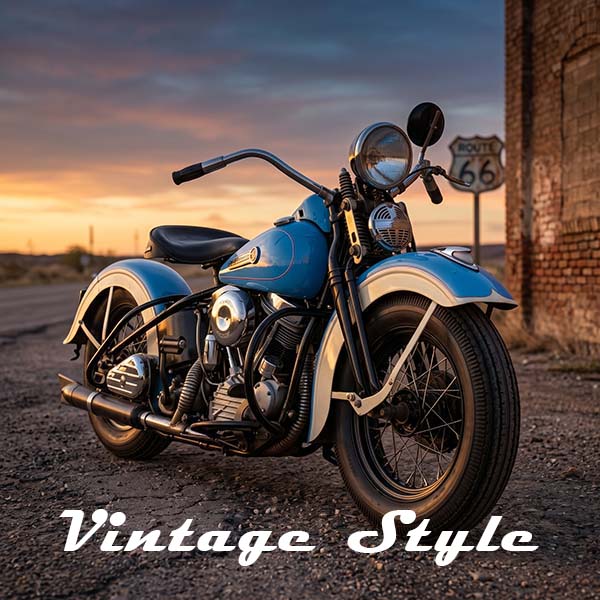
One of the sacred machines in Harley-Davidson history. Its polished rocker boxes looked like clenched fists, giving the engine its famous nickname. Its frame, horseshoe oil tank and tank-mounted dash laid down design DNA that would echo through later Softail models.
War, Returning Veterans & the Rise of the Panhead
Era Overview
The first half of the 1940s put Harley-Davidson in uniform. The company built military motorcycles for Allied forces during World War II. After the war, returning veterans brought home the habit of stripping, cutting and personalizing motorcycles — helping spark the early Bobber movement. At the same time, America’s expanding highways pushed Harley-Davidson toward heavier, more comfortable long-distance cruisers.
Core Evolution
The Knucklehead was powerful and charismatic, but heat and oil-control issues remained part of the story. In 1948, Harley-Davidson introduced the Panhead engine with aluminum cylinder heads, improved oiling and hydraulic valve lifters to reduce mechanical noise. In 1949, the company replaced the old Springer fork on its Big Twins with a hydraulically damped telescopic fork — a major step toward modern touring comfort.
Milestone Machines
WLA “Liberator”
A rugged World War II military motorcycle based on the 45-cubic-inch side-valve engine. Built in huge numbers, it became one of the steel horses of the Allied war effort.
1948 FL Panhead
Named for rocker covers that looked like upside-down baking pans, the Panhead opened a new era of smoother, cooler-running Big Twin touring machines.
1949 Hydra-Glide
The first Harley-Davidson to carry the “Glide” name, marking the arrival of hydraulic front forks and pointing directly toward the future Touring family.
Rock ’n’ Roll, Rebel Icons & the Birth of the Sportster
Era Overview
Elvis Presley shook America, and Marlon Brando’s outlaw image in The Wild One helped cement the leather-jacket motorcycle rebel in popular culture. Harley-Davidson had to deal not only with a changing youth culture at home, but also with serious pressure from lighter, quicker British motorcycles like Triumph and Norton. The answer had to be leaner, faster and more aggressive.
Core Evolution
To fight back against the British invasion, Harley-Davidson pushed its lightweight performance line forward with overhead-valve engineering and unit-construction design, where the engine and transmission shared a common case. In the heavy cruiser world, 1958 brought rear suspension to the big FL line. Before that, Harley-Davidson Big Twins were rigid-frame machines, relying heavily on sprung seats for comfort.
Milestone Machines
1952 K-Model
The direct ancestor of the Sportster. It used a unit-construction engine/transmission layout and rear suspension, giving Harley-Davidson a more agile performance platform.
1957 XL Sportster
A legend was born. With its 883cc overhead-valve Ironhead engine, the Sportster became one of the quickest Harley-Davidson models of its day and launched one of the longest-running names in motorcycle history.
1958 FLH Duo-Glide
“Duo” meant hydraulic suspension front and rear. The Duo-Glide helped establish the chassis language of the modern heavyweight touring motorcycle.
End of Volume I
By the end of the 1950s, Harley-Davidson had crossed a hard, heroic half-century: from a wooden shed in the horse-and-carriage era to the rock ’n’ roll age of hydraulic suspension, V-Twin identity and the Ironhead Sportster.
The next chapter moves into the 1960s through the 1980s — the age of hippies, Choppers, the AMF years, the Shovelhead, and finally the Evolution engine that helped bring Harley-Davidson back from the edge.
Hippies, Chopper Culture & the Shovelhead Engine
Era Overview
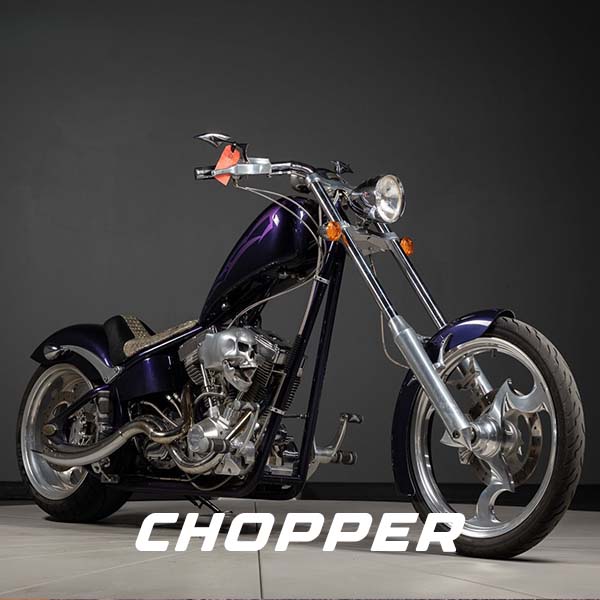
The 1960s were defined by Vietnam, rock music and a wave of rebellion across America. When Easy Rider hit theaters in 1969, the “Captain America” Chopper — long fork, ape hangers, no front brake and stars-and-stripes attitude — burned Harley-Davidson into the global imagination as a symbol of freedom and defiance. Veterans, outlaw clubs and garage builders cut up factory bikes and stretched them into radical customs. Chopper culture went worldwide.
Core Evolution
In 1965, Harley-Davidson finally gave comfort and convenience a serious upgrade by adding electric start to its Big Twin touring line. In 1966, the company introduced the third-generation OHV Big Twin: the Shovelhead. With redesigned heads and improved breathing, it delivered more power for the heavier touring motorcycles riders were demanding.
Milestone Machines
1965 Electra Glide
A landmark motorcycle. It was the last Big Twin model to use the Panhead engine and the first Harley-Davidson Big Twin to feature electric start. The “Electra” name came directly from that electric-start system.
1966 FL Electra Glide Shovelhead
The new Shovelhead engine earned its nickname from rocker covers shaped like coal shovels. Tough, raw and unmistakably Harley.
1969 AMF Buyout
Harley-Davidson was struggling with money and production capacity, and AMF acquired the company. The deal opened a controversial chapter that many riders still call the brand’s “dark years.”
AMF, Japanese Competition & Willie G.’s Factory-Custom Magic
Era Overview
The 1970s were painful, messy and strangely creative. Japanese four-cylinder motorcycles led by machines like the Honda CB750 hit America with speed, reliability and affordable pricing. Under AMF ownership, Harley-Davidson pushed production hard, and quality control suffered badly. The jokes about oil leaks and wrench time became part of the brand’s public image. But inside that pressure cooker, Willie G. Davidson — grandson of one of the founders and a design visionary — started shaping a new formula: the factory custom.
Core Evolution
To answer the displacement race, Harley-Davidson expanded the Big Twin from 74 cubic inches to 80 cubic inches in the late 1970s. Disc brakes and early electronic ignition began replacing older drum-brake and breaker-point technology, moving the brand toward a more modern mechanical package.
Milestone Machines
1971 FX Super Glide
Willie G.’s breakthrough. He combined the heavy FL chassis with the slimmer front end of the Sportster, creating a factory-built hybrid with custom attitude. It became one of the key ancestors of the cruiser and FX performance-custom family.
1977 FXS Low Rider
Lower suspension, straight bars, mag-style attitude and a street-ready stance. The Low Rider hit the market at exactly the right time and became an instant icon.
1977 XLCR Café Racer
A rare Harley-Davidson experiment in blacked-out, British-inspired café style. Sales were weak in its day, but today the XLCR is a highly prized collector machine.
The Eagle Soars Alone, the Evolution Engine & the Softail Revolution
Era Overview
In 1981, Willie G. Davidson and a group of Harley-Davidson executives bought the company back from AMF. The famous message was clear: “The Eagle Soars Alone.” Independent again, Harley-Davidson rebuilt itself by improving quality, adopting modern manufacturing methods and investing heavily in new engineering. By the middle of the decade, the comeback was real. Harley-Davidson had reclaimed pride in the American heavyweight motorcycle market.
Core Evolution
This decade brought a double revolution in chassis and engine design. Rubber-mounted engine systems helped isolate harsh vibration from the rider, especially on touring platforms. In 1984, the all-aluminum Evolution engine arrived and became a turning point for reliability, cooling and oil-tight performance. Belt drive also began replacing traditional chains on many models, offering quieter, cleaner and lower-maintenance power delivery.
Milestone Machines
1980 FLT Tour Glide
A touring milestone with a rubber-mounted engine, five-speed transmission and a frame-mounted dual-headlight fairing. It stands as a direct ancestor of the Road Glide and the “shark nose” touring style.
1982 FXR / Super Glide II
A sharper, stiffer, better-handling chassis that later became sacred ground for performance-minded riders. Today, the FXR remains a favorite foundation for Club Style and performance-oriented custom builds.
1984 FXST Softail
A commercial miracle. By hiding the rear shocks beneath the chassis, Harley-Davidson created a motorcycle that looked like a 1940s rigid-frame custom but rode with modern comfort. The Softail family was born.
1986 FLST Heritage Softail
Wide fenders, a fat front end and strong 1940s visual DNA. The Heritage Softail helped turn nostalgia into one of Harley-Davidson’s most powerful business engines.
End of Volume II
After three turbulent decades, Harley-Davidson had survived humiliation, ownership change and near-collapse. With Willie G.’s design instincts, executive courage and the reliability of the Evolution engine, the Motor Company pulled off one of the great comeback stories in American business.
By the late 1980s, Softail nostalgia and Evo dependability had washed away much of the old “leaks and breakdowns” stigma. Harley-Davidson proved that progress did not have to destroy soul. From this point forward, Harley was no longer just a motorcycle. It was an expensive, emotional and deeply American cultural belief.
Next comes the final stretch: the 1990s through 2025 — Fat Boy fame, Dyna culture, Porsche-assisted V-Rod power, Project Rushmore electronics, the Milwaukee-Eight era and the rise of the 121ci performance monster.
A New Fight: Culture, Technology & Expectation
From 1990 to 2025, Harley-Davidson was no longer fighting only other motorcycle brands. It was fighting global emissions rules, automotive-grade electronics, changing rider expectations and the restless taste of a younger generation.
Across these decades, Harley-Davidson did two things at once: it held tightly to the air-cooled V-Twin as a cultural icon, while steadily adding liquid cooling, CAN-bus electronics, connected infotainment, rider-assist technology and variable valve timing where the future demanded it.
Fat Boy Fame, the First Dyna & the Twin Cam Era
Era Overview
In the 1990s, Harley-Davidson cut through popular culture like a big-inch V-Twin on open throttle. Buyers waited months for bikes. Hollywood stars, Wall Street riders and blue-collar workers all wanted the same dream machine. During this golden decade, Harley-Davidson’s modern chassis families became clearly defined, while the long-serving Evolution engine prepared to hand the torch to a stronger new Big Twin.
Core Evolution
To simplify manufacturing while keeping rubber-mounted comfort, Harley-Davidson introduced the Dyna chassis as a more cost-effective replacement for the more complex FXR platform. In 1995, electronic fuel injection appeared on a flagship touring model. In 1999, the 1450cc Twin Cam 88 engine arrived, replacing the Evo in the Big Twin lineup and bringing more displacement for larger, heavier motorcycles.
Milestone Machines
1990 FLSTF Fat Boy
A pop-culture legend. When Arnold Schwarzenegger rode the Fat Boy through Terminator 2, the solid wheels, shotgun exhaust and heavy-shouldered stance became part of global motorcycle mythology.
1991 FXDB Sturgis
An early Dyna milestone and a sign that belt drive and rubber-mounted big twins were becoming central to Harley-Davidson’s future.
1994 FLHR Road King
A stripped-back touring king. With the giant fairing removed, a chrome headlight nacelle and detachable windshield gave riders a classic road-machine look with modern touring comfort.
Liquid-Cooled Heresy, the 100th Anniversary & the Rise of Dark Custom
Era Overview
The 2000s opened with Harley-Davidson’s 100th anniversary and the growing strength of CVO — Custom Vehicle Operations — for riders who wanted premium factory-built machines. But Japanese and European motorcycles were still pushing performance, and Harley-Davidson made a radical move: it worked with Porsche to develop a liquid-cooled engine. By the end of the decade, younger riders were turning away from heavy chrome and toward stripped, blacked-out, minimalist style. The Dark Custom mood was rising.
Core Evolution
To fit the Twin Cam into rigid-mount Softail models, Harley-Davidson introduced the counter-balanced Twin Cam 88B in 2000. In 2004, the Sportster finally received a rubber-mounted engine after decades of vibration-heavy charm. In 2007, carburetors disappeared from the U.S. Harley-Davidson lineup as electronic fuel injection became standard, while Big Twin displacement grew to 1584cc / 96ci and six-speed transmissions became widespread.
Milestone Machines
2002 VRSCA V-Rod
The rule-breaker. With an aluminum-heavy look, a 1130cc liquid-cooled Revolution engine and Porsche-assisted development, the V-Rod was not a traditional Harley — but it was one of the quickest production Harleys of its time.
2006 FLHX Street Glide
The stripped-down bagger formula that changed everything: no tour trunk, low stance, short windshield and clean touring lines. The Street Glide became one of the most influential baggers ever built.
2008 FXCW Rocker
A factory Chopper experiment with a floating seat and a rear fender tied visually to the swingarm. It was one of Harley-Davidson’s wildest production custom statements.
Project Rushmore, Digital Nerves & the Death of the Dyna
Era Overview
The 2010s were a decade of electronics. As cars moved into touchscreens, connected systems and smarter control units, motorcycles could no longer rely on sound alone. Harley-Davidson began hiding serious technology under classic bodywork. Then in 2018, the company made a decision that broke the hearts of old-school performance riders: the Dyna family, after 27 years of service, was discontinued and absorbed into the redesigned Softail platform.
Core Evolution
From 2011 onward, Harley-Davidson began rolling out CAN-bus / HD-LAN digital electrical architecture across the lineup. Project Rushmore, launched for 2014 touring models, brought improved fairing airflow, touchscreen infotainment and Twin-Cooled cylinder heads to selected bikes. In 2017, the Milwaukee-Eight engine arrived with a single cam and four-valve heads. In 2018, the Dyna line disappeared into the new Softail chassis, which used a hidden monoshock and a stiffer frame.
Milestone Machines
2010 XL1200X Forty-Eight
A Dark Custom hit. Peanut tank, fat front tire, low stance and under-bar mirrors gave the Sportster a new generation of visual attitude.
2016 FXDLS Low Rider S
One of the ultimate Dyna performance icons. Gold wheels, mini fairing, blacked-out attitude and a 110ci engine made it a Club Style hero and a final roar before the Dyna era ended.
2019 LiveWire
Harley-Davidson’s first electric motorcycle. No exhaust, instant torque and acceleration that felt more like a jet than a traditional cruiser.
Big Displacement, Adventure Crossover & Unified Performance
Era Overview
In the post-pandemic era, Harley-Davidson stepped far outside the old “heavy cruiser only” comfort zone. The brand entered the adventure-touring world, pushed traditional V-Twin displacement to new extremes and began replacing aging air-cooled Sportster bloodlines with liquid-cooled performance platforms. The message was clear: heritage still matters, but performance now has a louder voice.
Core Evolution
Harley-Davidson introduced the Revolution Max, a liquid-cooled DOHC V-Twin with variable valve timing. In the traditional cruiser and touring world, the displacement race intensified: 107ci gave way to 114ci, 117ci became a major new benchmark across key model families, and top-tier CVO machines moved into 121ci territory. Modern cockpit technology also advanced, with large screens, Skyline OS and Apple CarPlay integration reshaping the touring experience.
Milestone Machines
2021 Pan America 1250
Harley-Davidson’s breakout ADV machine. With a 1250cc liquid-cooled engine and adaptive ride-height technology, the Pan America took the fight into territory dominated by machines like the BMW GS.
2021 Sportster S
A liquid-cooled muscle bike that replaced the old air-cooled Sportster formula with Revolution Max power, 121 horsepower and a futuristic stance.
2022 FXLRST Low Rider ST
A modern performance-cruiser hero with a frame-mounted fairing inspired by the FXRT, higher bags and strong West Coast performance-bagger energy.
2024 CVO Road Glide ST
A high-output 121ci performance bagger with carbon-fiber details, titanium exhaust components and a claimed 127 horsepower. It represents the sharp edge of Harley-Davidson’s modern internal-combustion performance philosophy.
The Steel Totem Still Speaks
From the belt-driven single-cylinder machine built in a Milwaukee shed in 1903 to the modern giants armed with VVT, carbon-fiber bodywork, Skyline OS connectivity and nearly two liters of V-Twin displacement, Harley-Davidson’s story is more than an engine timeline.
It is a 122-year American epic of industrial romance, pop culture, rebellion and mechanical identity. Harley-Davidson has leaked oil, nearly collapsed, been bought out, been mocked and been written off more than once. Yet it never lost its soul. Every time that unmistakable “potato-potato” V-Twin rhythm fires up, the steel totem still has the power to make riders around the world feel something real.